
Integrating Facial Reflexology Method Lone Sorensen into Japan’s Frailty Prevention Strategy
Early-stage evaluation through postural and visual field testing By Lone SorensenMethod Lone Sorensen, Barcelona, Spainin collaboration with Noriyoshi Eguchi, Founder, TNC Research Institute, Japan
A New Chapter for Reflexology in Preventive Health
Across the world, healthcare systems are confronting the challenge of aging populations. Japan, where more than 30% of citizens are now over 65, has taken a pioneering role in transforming how society supports healthy longevity. Rather than waiting for dependency or illness to appear, Japan has shifted its focus to frailty prevention — empowering communities to identify early decline and act before it becomes irreversible. This unique context has opened an unprecedented opportunity to introduce Facial Reflexology, Method Lone Sorensen within a public health framework, in collaboration with the TNC Research Institute, led by Noriyoshi and Mai Eguchi. Our shared goal: to explore how neuro-reflex stimulation of facial areas and points, integrated with sensory-based movement training, can strengthen the nervous system, improve posture and balance, and ultimately help prevent frailty in older adults.
Our shared goal: to explore how neuro-reflex stimulation of facial areas and points, integrated with sensory-based movement training, can strengthen the nervous system, improve posture and balance, and ultimately help prevent frailty in older adults.
The TNC Research Institute: Collaborating with Japan’s Public Frailty Programs
The TNC Research Institute (Total Neuro Conditioning) is an established and respected partner working alongside Japan’s municipal healthcare initiatives. Under the leadership of Noriyoshi Eguchi, TNC has collaborated with local governments to help implement the national Frailty Check Program, developed by the Institute of Gerontology at the University of Tokyo (IOG). This program trains local residents as frailty supporters, offering regular assessments and practical community sessions focused on nutrition, exercise, and social engagement. Eguchi’s team brings to this structure a neurosensory conditioning method that enhances balance, coordination, and cognitive alertness through movement and vestibular stimulation. The TNC approach has been adopted by multiple municipalities as part of Japan’s broader frailty-prevention framework, giving it strong institutional credibility. Within this context, the TNC Research Institute has invited the Method Lone Sorensen team to explore the potential contribution of Facial Reflexology as a complementary practice — aimed at supporting neurovascular function and emotional stability within frailty-prevention activities.
A Shared Foundation: Sensory Integration and Neuroplasticity
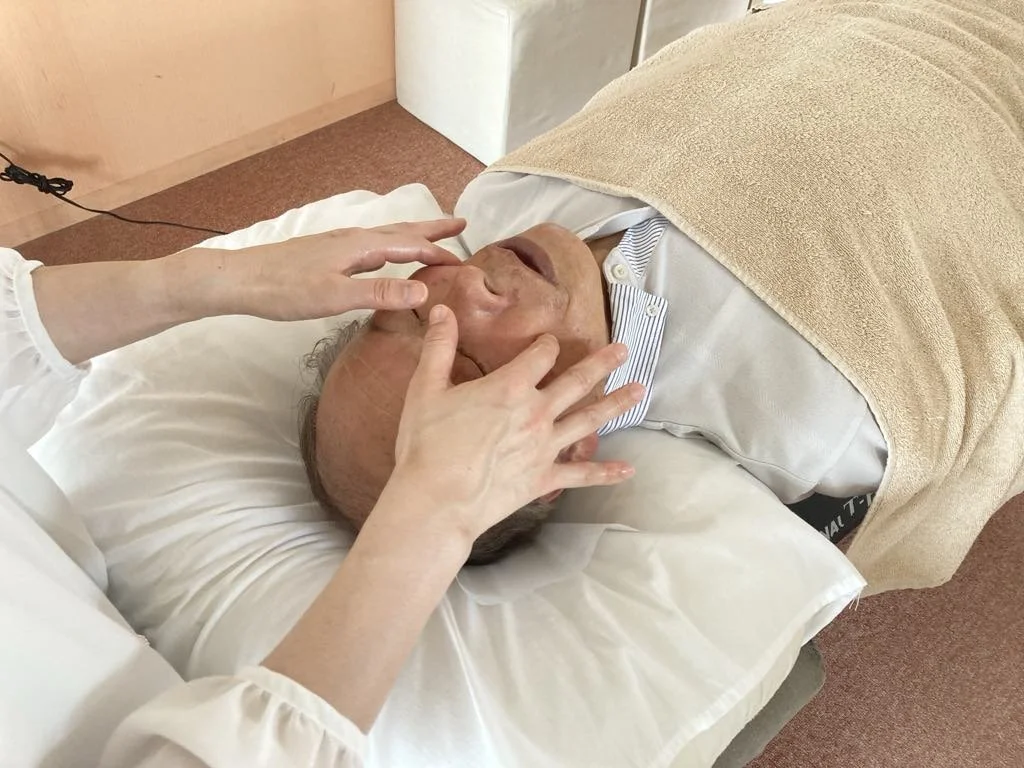
At its core, both TNC and Facial Reflexology (Method Lone Sorensen) work through the same biological principle: sensory input creates neural change.
TNC stimulates proprioceptive and vestibular pathways through movement and balance exercises to activate brain regions responsible for orientation, posture, and coordination.
Facial Reflexology, Method Lone Sorensen, by contrast, works through cutaneous and cranial nerve stimulation, activating sensory fields that influence the brainstem, limbic system, and autonomic nervous system.
Together, they create a multi-sensory conditioning system that simultaneously engages body and brain. This synergy is particularly relevant to frailty prevention, where loss of balance, slowed reaction, and emotional withdrawal often precede physical decline. By activating sensory and neural pathways, we can potentially maintain mobility, emotional engagement, and cognitive responsiveness longer into old age.
Early Evaluation: Postural, Visual Field Tests and Oral Frailty Assessment (PATAKA Test)
To begin documenting outcomes, we have introduced a structured evaluation protocol consisting of postural analysis and visual field assessment conducted before and after TNC movement and Facial Reflexology sessions. These methods allow us to observe functional changes in the nervous system that go far beyond what can be seen in physical appearance alone.
a. Postural Evaluation
Postural testing is used to assess how the body organizes itself in space — vertically, laterally, and dynamically. We look at:
Alignment of the head, spine, and pelvis,
Weight distribution between left and right sides,
Stability in static and moving positions. Even small changes in the position of the head, shoulder, or hips can indicate shifts in muscle tone and vestibular integration following neuro-reflexology stimulation.
b. Visual Field Evaluation – A Window into Postural Balance
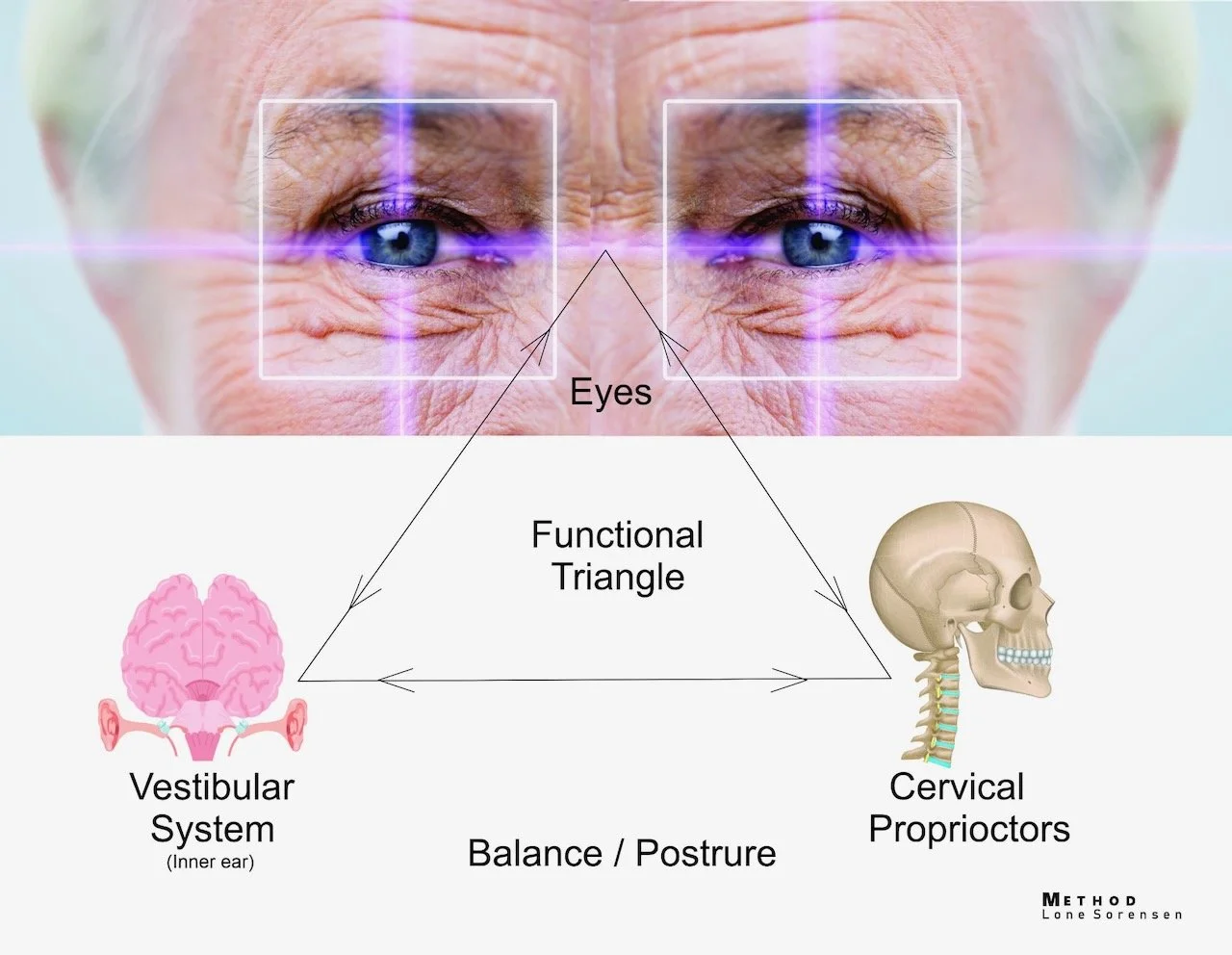
Contrary to common belief, visual field testing is not limited to detecting eye or vision problems. In neurology and postural therapy, it is also used as an indicator of global postural organization and sensorimotor integration. The eyes, inner ear (vestibular system), and cervical proprioceptors form a functional triangle that governs balance, spatial awareness, and movement coordination. Any restriction in the visual field can reflect compensation in body posture — and vice versa. Participants often report sensations of increased peripheral awareness, enhanced spatial orientation, or reduced visual fatigue — all of which correlate with greater postural stability and relaxation.
The PATAKA Test and Its Relevance in Oral Frailty Assessment
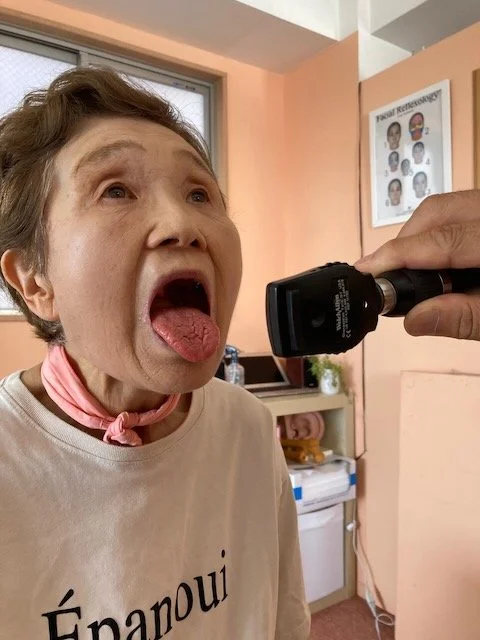
In oral frailty assessment, one of the simplest yet most revealing tools is the PATAKA test.
his test evaluates the motor control and coordination of the speech and oral muscles — key indicators of both neurological integrity and orofacial vitality. During the test, the individual is asked to repeat syllables such as “pa,” “ta,” and “ka” as quickly and clearly as possible, often for a set duration (commonly 5 seconds). Each syllable activates different parts of the mouth and tongue:
Whatever it is, the way you tell your story online can make all the difference.
“Pa” engages the lips (labial movement)
“Ta” involves the front of the tongue (alveolar movement)
“Ka” uses the back of the tongue (velar movement) In our clinical work, we have been conducting the PATAKA test before and after facial or neuro-reflex therapy sessions.
This allows us to observe measurable changes in speech clarity, rhythm, and motor precision, which often correlate with improved brain activation, cranial nerve stimulation, and overall neuromuscular balance
From Data to Daily Practice: Community Integration
What makes this initiative particularly exciting is its real-world application. Unlike laboratory research, the TNC–Facial Reflexology collaboration operates directly within government-run community programs — serving real participants in local health centers. Participants describe:
Feeling “lighter” and more balanced after sessions,
Being “mentally calmer” with less dizziness or tension
Feeling “more present” in their movements and interactions. These subjective experiences mirror what Facial Reflexology practitioners around the world observe daily. Placing them within a structured, measurable framework allows us to begin translating experience into evidence.
A Grassroots Model with Global Implications
The success of Japan’s frailty prevention model lies in its grassroots design. Instead of depending solely on doctors or therapists, it trains and empowers ordinary citizens to become frailty supporters. This community-based, human-centered model aligns perfectly with the philosophy of Reflexology. The Method Lone Sorensen has always emphasized empowering individuals — parents, caregivers, and health professionals alike — with tools they can use daily to promote nervous system balance, emotional well-being, and self-regulation. In this sense, the Japanese system demonstrates how Facial Reflexology could one day be embedded in public health worldwide — not as luxury therapy, but as a preventive and educational tool available to every community.
Expanding the Vision: Education and Research
As part of this collaboration, Mai Eguchi of the TNC Institute is coordinating educational outreach to connect university researchers, care institutions, and wellness organizations. The long-term goal is to:
Integrate Facial Reflexology (Method Lone Sorensen) and touch therapy into frailty prevention programs,
Offer introductory workshops for families of children with disabilities and for elder care centers,
Create research partnerships to document measurable neuro-sensory effects,
Gradually transition interested participants into professional Facial Reflexology training.
This dual approach — education and evidence — will ensure that Facial Reflexology is both understood and respected as a complementary component of health promotion.
Observing the Human Impact
Although the data phase is still in progress, the early observations from participants and facilitators have been highly encouraging. Many report feeling lighter and more balanced, less eye tension, fewer headaches, and a general sense of mental clarity and emotional calm following sessions. These shared experiences illustrate the social and emotional dimensions of frailty prevention, where maintaining dignity, confidence, and connection can be just as important as improving physical stability.
The Broader Perspective: A Neuro-Reflex Framework for Global Health
The Japanese collaboration demonstrates a pathway for Facial Reflexology, Method Lone Sorensen to engage with public health systems by speaking the language of neuroscience, measurement, and prevention. Postural and visual field testing provide accessible tools for demonstrating real-world effects on the nervous system, balance, and perception — key indicators of frailty risk. In the long term, this model could be replicated in other contexts: for dementia prevention programs in Europe, family caregiver support, or neurodevelopmental and sensory balance projects for children. The essence is the same: to empower human beings to touch, feel, and connect in ways that awaken the body’s own neuro-regenerative capacities.
Conclusion: Early but Promising Steps
Our partnership between Method Lone Sorensen and the TNC Research Institute remains in its early stages, but it already demonstrates how Facial Reflexology can find meaningful, evidence-based expressions within public health initiatives. Japan’s frailty prevention strategy, rooted in community trust and sensory activation, offers a profound lesson to the global Reflexology community: prevention begins not with medicine, but with awareness, connection, and touch. We look forward to sharing further data and insights as this collaboration evolves — and warmly invite colleagues, researchers, and practitioners worldwide to follow and join us in exploring the future of Neuro Reflexology in preventive health.
By Lone Sorensen – International Reflexology Institute